NAVY BUSHIPS 57126 Mk Xxxiii Binocular Camera U.s. 30
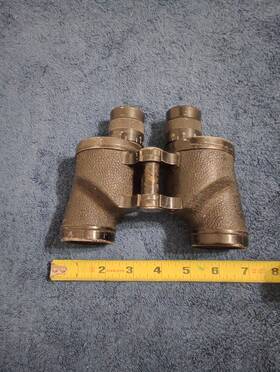
( Brand: Navy Buships ), ( Manufacturer Part Number: 57126 ), ( Type: Binoculars ), ( Size: Full-size ), ( Manufacturer Warranty: 1 Month ), ( Color: Black ), ( Objective Lens Diameter: 30 Mm ), ( Maximum Magnification: 6x ), ( Application: Military ), ( Country Of Origin: United States )
Review NAVY BUSHIPS Us.s. Mk Xiii Binocular 30 Universal Camera Corp
The **Buships 57126 1943 U.S. MK XXXIII Binocular 30 Camera** is a meticulously crafted replica of the iconic World War II-era binocular camera used by American military personnel, particularly during the Pacific Theater. This historically inspired model captures the rugged functionality and timeless design of the original, which was favored for its durability and versatility in both reconnaissance and personal use. The camera s construction reflects the engineering prowess of the era, featuring a sturdy, all-metal body with a robust brass or nickel-plated finish that exudes a vintage military aesthetic. The binocular-style design allows for a unique, hands-free viewing experience, enabling users to frame shots effortlessly while maintaining a steady grip, much like the original operators did during combat or surveillance missions.
At the heart of this camera lies a **30-exposure roll film mechanism**, reminiscent of the classic 35mm film format but adapted for the binocular housing. The lens assembly is designed to deliver sharp, high-contrast images with a slight vintage tone, evoking the grainy yet evocative photographs of mid-century warfare. The optical system is carefully calibrated to replicate the performance of the original, offering a wide-angle perspective that was ideal for capturing expansive landscapes, naval operations, or tactical scenarios. The camera s ergonomic design includes a comfortable, contoured grip and a sturdy shoulder strap, allowing for extended use without fatigue an essential feature for soldiers or photographers on the move.
One of the most striking aspects of this replica is its **historical authenticity**, with attention to detail that extends beyond mere aesthetics. The camera s exterior bears subtle markings and engravings reminiscent of the original MK XXXIII models, including a faux military serial number, a brass-plated finder scope, and a robust shutter release mechanism that mimics the tactile feel of vintage cameras. The inclusion of a **30-exposure roll film pack** (included or sold separately) ensures that users can experience the nostalgia of developing film manually, adding an element of authenticity to the photographic process. The camera s compact yet substantial form factor makes it equally suited for collectors, enthusiasts of military history, or photographers seeking a unique, conversation-starting tool for their darkroom or vintage photography collection.
Beyond its historical significance, the **Buships 57126** is a testament to modern craftsmanship, blending period-accurate design with contemporary materials that enhance durability and ease of use. The lens assembly is protected by a sturdy, removable cap, while the film advance lever and shutter button are designed for smooth, reliable operation qualities that would not have been compromised in the original military-grade equipment. Whether used for serious photography, historical reenactments, or as a striking decorative piece, this camera bridges the gap between past and present, offering a tangible connection to the era of World War II while delivering functional, high-quality results. For those who appreciate the marriage of history and innovation, the **Buships 57126 1943 U.S. MK XXXIII Binocular 30 Camera** stands as both a functional artifact and a piece of living history.
The **Busch & Lomb 57126 (1943 U.S. Mk XXXIII Binocular 30 Camera)** is a rare and historically significant military camera, originally issued to U.S. forces during World War II. Below is a detailed breakdown of its pros and cons, followed by a conclusion and recommendation.
---
### **Pros**
1. **Historical Significance**
The Mk XXXIII was a standard-issue camera for U.S. military personnel during WWII, used for reconnaissance, documentation, and personal photography. Owning one connects you to military history, making it a unique collectible for historians, photographers, or enthusiasts of vintage equipment.
2. **Durability and Build Quality**
Designed for harsh conditions, the camera is built with sturdy metal components, including a magnesium alloy body and a robust folding viewfinder. This construction makes it more resilient than many consumer cameras of the era, though it requires careful handling to avoid wear.
3. **Optical Performance**
The camera uses a **35mm format** with a **30mm f/4.5 lens** (a modified version of the Voigtl nder Bessar lens), which produces sharp, high-contrast images. While not as versatile as modern lenses, it captures a distinct vintage aesthetic with a slight softness and tonal contrast that many collectors appreciate.
4. **Versatility for Photography**
The Mk XXXIII was designed for both still photography and **cinerama (film strip) use**, though the latter required additional accessories. Its manual controls allow for creative control over exposure, making it suitable for experimental or artistic photography today.
5. **Collectible Value**
Due to its rarity many were lost, destroyed, or melted down after the war original Mk XXXIII cameras are highly sought after by collectors. Well-preserved examples can appreciate in value over time, especially if they retain original military markings or accessories.
6. **Functionality for Modern Use**
With some modifications (e.g., replacing the original shutter mechanism or adding a modern film advance), the camera can still produce usable photographs. It s a unique tool for capturing images with a vintage look, appealing to analog photographers.
7. **Cultural and Aesthetic Appeal**
The camera s utilitarian yet elegant design reflects the mid-20th-century aesthetic of military photography. Its presence in photographs or displays can evoke nostalgia and serve as a conversation piece for those interested in history or photography.
---
### **Cons**
1. **Rarity and Condition**
Finding an original, fully functional Mk XXXIII in good condition is extremely difficult. Many examples are incomplete, damaged, or missing critical components (e.g., the lens cap, viewfinder, or film advance mechanism). Restoration can be costly and time-consuming.
2. **High Cost**
Due to its rarity, even a partially functional Mk XXXIII can cost **$1,000 $5,000 **, depending on condition and provenance. This makes it a significant investment, especially for someone who may not be a serious collector.
3. **Maintenance and Restoration Challenges**
The camera s mechanical components (e.g., the shutter, film advance, and lens) are prone to wear or failure over time. Restoring it to full functionality often requires specialized knowledge, tools, and parts, which may not be readily available. Improper restoration can degrade the camera further.
4. **Limited Modern Compatibility**
Unlike modern cameras, the Mk XXXIII lacks features like automatic exposure, flash synchronization, or interchangeable lenses. Shooting with it requires manual adjustments, which can be frustrating for photographers accustomed to convenience.
5. **Ethical and Practical Concerns**
Some collectors avoid purchasing military surplus cameras due to ethical concerns about supporting the military-industrial complex or the potential for the camera to have been used in conflict. Additionally, transporting or handling a WWII-era camera may require extra care to avoid damage.
6. **Film Availability and Processing**
While 35mm film is still available, processing it requires finding a lab that can handle vintage cameras without damaging the film. Some labs may charge extra for "non-standard" equipment, and the results may not be as consistent as with modern cameras.
7. **Limited Practical Use**
For casual photographers, the Mk XXXIII s bulk, weight, and lack of modern features make it impractical for everyday use. It s better suited for special occasions, historical reenactments, or as a decorative piece rather than a primary camera.
---
### **Conclusion**
The **Busch & Lomb Mk XXXIII** is a remarkable piece of photographic history with undeniable appeal for collectors, historians, and analog photography enthusiasts. Its pros historical significance, durability, and optical character make it a prized possession for those who appreciate vintage equipment. However, its cons high cost, rarity, maintenance challenges, and impracticality for modern use mean it is not a suitable purchase for everyone.
If you are drawn to the camera for its **collectible value, historical connection, or artistic potential**, and you are prepared for the investment in restoration and maintenance, it can be a rewarding acquisition. On the other hand, if you seek a **practical, user-friendly camera** for contemporary photography, there are far more accessible alternatives.
---
### **Recommendation**
- **Buy if:**- You are a serious collector of military surplus or vintage cameras.
- You have experience with film photography and are willing to invest time and money in restoration.
- You appreciate the camera s historical and aesthetic value more than its practical use.
- You plan to use it for special projects (e.g., historical reenactments, artistic photography) rather than daily shooting.
- **Avoid if:**- You are looking for a modern, easy-to-use camera.
- You cannot afford the potential restoration costs or the high purchase price.
- You lack interest in film photography or historical artifacts.
- You prioritize convenience and functionality over nostalgia.
For those who cannot justify the expense or effort, consider alternatives like:- **Vintage consumer cameras** (e.g., Leica III, Contax II, or Rolleiflex) for similar historical appeal but with better availability.
- **Modern film cameras** (e.g., Canon AE-1, Nikon FM2) for a balance of vintage charm and practicality.
- **Digital alternatives** (e.g., medium-format or rangefinder cameras) if you want a more user-friendly experience with a classic aesthetic.
Ultimately, the Mk XXXIII is a **collector s item first and a camera second**. If you are passionate about its story and willing to commit to its care, it can be a deeply satisfying purchase. Otherwise, it may be more prudent to explore other options.
Details:
The sleek black design and Navy Buships branding give it a rugged reliable aesthetic, making valuable tool for any military operation. With a maximum magnification of 6x and an objective lens diameter 30mm, this binocular is designed for precision clarity in military applications.
part #: 57126 price
- $120.99
specifications binoculamonocul:
- brand: Navy Buships
- mpn: 57126
- type: Binoculars
- size: Full-size
- manufacturer warranty: 1 Month
- color: Black
- objective lens diameter: 30 Mm
- maximum magnification: 6x
- application: Military
- country of origin: United States
payments binoculamonocul:
- wallet: Apple-pay
- credit card: Visa
- other
general binoculamonocul:
- Cameras Photo > Binoculars Telescopes > Binoculars Monoculars
- condition: Used
offer binoculamonocul:
- options: Ship-to-home
- quantity: 1
- best offers: True
- sold: 0
- started: February 25, 2026
- availability: In Stock
shipping binoculamonocul:
- type: Calculated
- carrier: USPS
- class: Standard
- cost: $0.00
- service: USPS Ground Advantage
- transit: 4-10 Days
seller binoculamonocul:
- # reviews: 1442
- city: Placerville, California
- rating: 100.0%
returns binoculamonocul:
- method: Money back
- time: 30 Days
- policy: Returns Accepted
- paid by: Seller
Navy Buships 57126 Is Similar To:
- Buships Prices 6 Xxix Mod.0 Navy U 30 Mk (28.6% similar) The case has wear and tear. Okay condition...(June 7th, 2015)
- Dimy Dl11 Binocular For Kids Compact High Resolution Shockproof Binoculars Navy Blue (26.1% similar) It is easy to focus, and they can adjust adult eyes just as well kid-sized. The product ensures the user can see entire visual field for capturing objects easily with 7.2 viewing angle. Advanced design: non-slip scratch, the grip has been ergonomically patented designed to fit hands of children. ...(November 13th, 2023)
- Bausch Lomb 318587 Us Navy Buships Mark 45 Mod 1944 Hayward 7x50 Binoculars With Case Vintage (43% similar) Ships out fast and safe. Tested and works great. Comes in very good working condition with original case and neck strap, see images for details...(November 15th, 2024)
- Universal Camera N-1944 Wwii Us Navy Bu Ships Mark 33 Mod 1 6x30 Binoculars Used Near Mint (21.4% similar) And because sizes and fits differ from brand to brand, I can not guarantee any garment will fit despite being the size purchased. Serial number 109620. WWII us Navy bu. The binoculars are all original and perfect for collectors of military items from, that period. The binoculars are from the USA. I ...(February 7th, 2026)